











Basket updates when opened…
Papua New Guinea

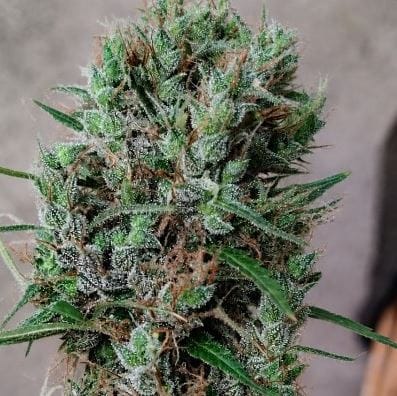
Short Description
Rare Goroka pure sativa landrace with huge size, 18–24 week bloom, Thai-like lemon-floral aromas and intense effects.
Characteristics
| Stock Availability | |
|---|---|
| Seed Type | |
| Flowering Period Type | |
| Indica / Sativa | |
| Strain Type | |
| Strength | |
| Environment | |
| Indoor Flowering Time | |
| Outdoor Harvest Time | |
| Yield | |
| Hardiness | Resistant to High Temperature, Resistant to Low Temperature, Resistant to Mould, Resistant to Pests |
| Smell / Taste | |
| Medical Strains | Appetite Stimulant, Cerebral, Contemplation, Focused, Psychedelic |
Description
Papua New Guinea is Ace Seed bank’s rare Goroka landrace, offered as regular seeds. It is a 3rd generation pure sativa landrace from Goroka in the Eastern Highlands of Papua New Guinea, and it keeps the scale, long flowering and untamed character you’d expect from a true equatorial sativa rather than a modernised hybrid.
This line comes from a region where cannabis became established from the 1960s onwards, after introductions linked to travellers, workers, soldiers and trade routes from Southeast Asia. Over time, those tropical sativas adapted to Papua New Guinea’s warm, humid conditions and local growing preferences. Ace Seed bank places PNG sativas in the Southeast Asian maritime and Pacific group, sitting between Indonesia and Melanesia. The line was preserved through open pollination using 70 different parental plants, with the aim of keeping broad genetic diversity while selecting the most interesting females for release.
That preservation work is a large part of the appeal. Papua New Guinea genetics are still scarcely seen outside the Western Pacific and have barely entered modern breeding in recent decades. Ace Seed bank also credits the North American grower Azure for helping make the preservation and release of this PNG Goroka line possible. For breeders, preservationists and landrace collectors, this is rare tropical material rather than another close relative of the usual contemporary gene pool.
Papua New Guinea is listed as 100% sativa. Headline cannabinoid figures include THC 15.18–15.7%, CBD 0.01–0.48%, CBG 0.2–0.63%, THCV 0.07–0.17%, CBC up to 0.14% and CBN 0.072%. One analysed sample also showed 1.138% Δ9-THC and 0.097% CBG. The numbers tell only part of the story here, as the reported effect is very much in the old equatorial sativa style: long lasting, mentally strong and not especially gentle.
Big plants, long flowering, proper tropical habits
Papua New Guinea gets huge. Outdoors, Ace Seed bank reports exceptional plants reaching up to 5–6 metres, with explosive growth, strong branching under high light intensity and long internodal spacing. It has a high flower-to-leaf ratio and forms large, airy, foxtailed flowers that slowly build into big colas. That open flower structure fits its humid background; it’s part of the plant’s tropical adaptation rather than a modern dense-bud look.
Flowering takes patience: 18–24 weeks indoors, with outdoor harvest around late December to January. Indoors it needs strong light, enough space and a grower who is comfortable managing long-flowering sativas. Ace Seed bank recommends an 11/13 light cycle during the first half of flowering, then 10/14 in the second half, with daytime temperatures around 25°C and night temperatures around 15°C to help reduce continuous reflowering and encourage full maturation.
It can work in SOG because of its heavy main cola production, and it also reacts vigorously to pruning for SCROG, horizontal or net-style growing thanks to its productive side branches. Nutrient needs are moderate in both growth and flowering. Outdoors, it reaches its full potential in tropical or subtropical conditions, though Ace Seed bank notes it can be grown within latitudes of 20º–37º, preferably in a warm coastal climate. A greenhouse is especially helpful for proper ripening outside the tropics.
Resistance is a useful strength for this kind of plant. It is rated high against powdery mildew and botrytis, average-high against spider mites and white fly, and average-high for both cold and heat. For a tropical landrace, the population is also described as notably consistent, without extreme variation, with a balanced female/male ratio and good sexual stability, even indoors.
Thai-like perfume and a demanding high
The aroma has a clear classic Thai feel: lemon, sweet-and-sour notes, creaminess, sweet floral perfume, herbal and organic/fermented tones, with some plants showing subtle menthol and liquor hints. The best examples are described as surprisingly refined for a population that might first seem primitive or wild.
The effect is reported as potent, complex and multi-staged, lasting 3–4 hours or more. It can start with a heavy, stuporous kick and may feel unsettling, even edging towards panic in some cases. It then becomes cerebral, expansive, nervous and challenging, with a strong introspective side and unusual mental clarity.
As it develops, the experience can become more immersive and disorientating, with time distortion, delayed or blurred vision, dizziness or vertigo, short-term memory loss and a strong sense of separation between body and mind. Some plants finish in a more relaxed landing phase, with calm disconnection, increased appetite, red eyes and a blank, worn-out feeling.
This is not the obvious choice for someone after a soft, predictable evening smoke or a quick modern indoor run. Papua New Guinea is better matched to experienced sativa fans, breeders and preservation-minded growers who understand what an 18–24 week equatorial landrace asks for, and why a rare Goroka line may be worth the wait.
Customer Reviews
You must be logged in to post a review.
From £28.37


Reviews
There are no reviews yet.